Electronic Parts Fundamental & Applications
As beginners to electronic parts and the construction of electronics projects, sometimes one may just take all the information provided in the magazines and start to build the project.
The schematics and PCB provided may not be understood fully and if there is a mistake in the information, one may not be able to troubleshoot the printed circuit board. Therefore, it is important that one understands why each electronic parts or electronic component is used and its unique characteristics.
Batteries
The primary battery is intended for one time use only and is disposed after the charge has dropped to a level that cannot be used. The secondary battery can be recharged many times and is reusable.
Capacitor Types
An introduction to fundamental of capacitors. Electrolytic, ceramic, tantalum, metallized polyester and safety types are introduced here. This device is the most common electronic parts to be found in any design.
Digital Light Sensor
In applications such as lighting controls, heating ventilation and air conditioning controls or temperature controls system, there are times when you will need to adjust the control parameters based on the intensity of the ambient light. You may want to consider using Intersil ISL29001 digital light sensor.
Digital Temperature Sensor
The recent decade has seen the use of integrated circuits devices in many temperature controlled related systems because they are much smaller, provide a more accurate measurement and simpler to be integrated to other digital control devices.
Diodes
Diode is a common device in most electronics devices. This page discussed their basic characteristics and applications in electronics project.
Electroluminescent Lighting and Drivers
Electroluminescent lighting is achieved by using an EL lamp which is a piece of plastic material coated with a phosphorous material. When a high voltage of 40V or greater is applied across this material and reverse, it will emit light. Fundamental of EL and driver are provided here.
Electronic Project Enclosures for housing assembled PCB
Electronic Project Enclosures are often needed to house assembled printed circuit board and other electronic parts. Some basics types are provided here.
When a junction temperature of a semiconductor rises above its maximum allowable temperature, there is a need to dissipate this temperature or else the device will breakdown. One of the common method used to dissipate the heat is using a heat sink.
IGBT (Insulated Gate Bipolar Transistor)
The fundamental of IGBT and its characteristics are provided here. It has become a common device in motor controls in recent years.
Inductor or Coil
The fundamental of inductor, its characteristics and their applications in electronic devices are provided here.
LCD
An introduction to liquid crystal display which is now being widely used in most of the electronics project.
LEDs
Introduction to LEDs, its fundamentals and applications in various electronic circuits. It is fast replacing incandescent bulbs in many applications.
Microcontroller
The use of microcontroller as a major part of an electronic device has become indispensable these days.
Operational Amplifier
The Operational Amplifier is a differential amplifier having a large voltage gain, very high input impedance and low output impedance.
Resistors
An introduction to carbon film resistors and their typical characteristics. It is one of the most common device that is used in almost every electronic device.
Seven Segment Displays
Fundamentals of Seven Segment Displays, its applications and drivers.
Thermistors
Thermistors' fundamentals and Applications.
Thyristors or SCR
Thyristors are switching devices based on PNPN structure. They are very reliable and have current ratings up to a few thousands amperes and voltage ratings up to 5000V.
Transformers
Fundamentals and construction of Tranformers.
Transistors
Introduction To Transistors. A brief history and typical characteristics of transistor and graphs are shown here.
Triac
A triac consists of two SCR connected in inverse parallel where the gates are connected together. The connections are labelled as MT1(Main Terminal 1), MT2(Main Terminal 2) and G(Gate).
Varistor as a protective electronic parts
Varistor is a voltage dependent device that clamp a voltage to a certain level and absorbed the energy to prevent damage to other parts of a circuitry.

Recent Articles


-
Electronics Design Contest
 Join electronics design contest and win prizes. Test your hardware and software skills against the best designers from the rest of the world.
 -
Garden Watering Circuit
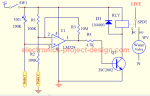 Experiment and test out this automatic garden watering circuit that will detect the moisture of the soil and on or off the water valve accordingly.
 -
Electronics Events
 Join the electronics events to enhance your knowledge and network with other professionals in this industry.
Design and build a battery tester to test dry cell and rechargeable battery with a voltage of less than 2V. Check here.
PCB Prototypes
Make your own printed circuit board and learn the processes involved along the way. More here.
Learn how to dissipate heat from your heat-sensitive electronic components.
Test the reliability of your products to the environment by stressing them in test lab.
Explore the use of 7-Segment Display, 555 Timer, Decade Counter and Binary Adder. Get the circuit.
Construct this simple door bell chime and have fun. Find out more here.
Build this simple home alarm to protect your house from intruders. See the schematic circuit.
New! Comments
Have your say about what you just read! Leave us a comment in the box below.