Environmental Testing To Ensure Reliability Of Electronic Products
Introduction To Environmental Testing
Most design engineers will design a good product that works well during the initial stages of development and testing. However, how do you ensure that when the product goes into mass production, most of them are still in good working condition after using them for a long period of time?
In other words, how do you ensure the quality and reliability of this product when it is operated for an extended period of time under varying environmental conditions. Environmental testing is the answer to this question.
This testing will help the manufacturer to accelerate the aging process of the product to predict its life cycle analyse the modes of failure and filtering out those products that are not fit to be shipped out to the customers. In order for the testing to be carried out, equipment are needed to perform this test. One has to analyse and calculate whether it is worthwhile to invest in the equipment or to just perform the reliability tests in test houses.
Many of these test houses are able to offer consultancy services as to the standards and test methods that will be used with regards to the electronic products that will be tested. The reliability testing is one of the secret that makes a world of difference between a good product to another.
Some of the basic equipment that are needed for the testings are temperature and humidity chambers, thermal shock chambers, vibration machines and salt-fog chambers. Other more specialized equipment are needed depending on the types of products that will be tested.
Types Of Testing
The following are the typical type of reliability testing that are done on the electronic products.
Tempature Humidity Testing
Temperature and humidity chambers are used to test the influence of temperature and humidity on the products. Tests involved subjecting the products to the cycling of the temperature and humidity of the chambers.
Thermal Shock Testing
Thermal Shock is performed to determine the ability of a part (electronics devices, electronic products, etc) to withstand sudden changes in temperature.
Vibration Testing and Methodology
Vibration testing is the shaking or shocking of a component or assembly to see how it will stand up to real life environment
Back To Environmental Testing Home Page

Recent Articles


-
Electronics Design Contest
 Join electronics design contest and win prizes. Test your hardware and software skills against the best designers from the rest of the world.
 -
Garden Watering Circuit
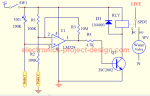 Experiment and test out this automatic garden watering circuit that will detect the moisture of the soil and on or off the water valve accordingly.
 -
Electronics Events
 Join the electronics events to enhance your knowledge and network with other professionals in this industry.
Design and build a battery tester to test dry cell and rechargeable battery with a voltage of less than 2V. Check here.
PCB Prototypes
Make your own printed circuit board and learn the processes involved along the way. More here.
Learn how to dissipate heat from your heat-sensitive electronic components.
Test the reliability of your products to the environment by stressing them in test lab.
Explore the use of 7-Segment Display, 555 Timer, Decade Counter and Binary Adder. Get the circuit.
Construct this simple door bell chime and have fun. Find out more here.
Build this simple home alarm to protect your house from intruders. See the schematic circuit.
New! Comments
Have your say about what you just read! Leave us a comment in the box below.