Microcontroller Programming
Microcontroller Programming Keypad Decoding Techniques
In the design of electronics project, it is very common to use a keypad matrix as a means for user to interface to the product. In order to minimize the number of pins used in the microcontroller, the keys should be arranged in as square a matrix as possible.
One example is the use of 4 X 4 matrix arrangement in a 16 keys keypad. This arrangement require only 8 pins. If it is arrange in a 2 X 8 matrix, 10 pins will be needed instead of 8. The microcontroller programming keypad decoding method has 4 inputs pins designated as row 1 to row 4 and 4 output pins designated as column 1 to column 4. The 4 input ports need to have a pulldowns resistor to ensure that they are always at a deterministic state either login "0" or login "1".
This is achieved by having an internal pulldown resistor in the MCU itself or by having 4 external resistors connected to each of the input pin and ground.
At the start of the scanning, column 1 will be turned ON(login "1") and column 2, 3, and 4 turn OFF (logic "0"). When this happen, the input ports row 1 to row 4 are scanned for its status. If key 7 is pressed, the pin PA2 at row 3 will return as logic "1" and the rest of the rows will return logic "0".
By having a debouncing routine as a means of confirmation that the particular key has been pressed, the MCU will know which key is pressed and thus is able to proceed to determine the next action to take.
Low Power Consumption Consideration
In the design of key interface, it is also important to choose a MCU that is able to go into power down mode after a certain time has elapsed. This will ensure that the batteries that are used to power up the MCU will last longer. It will only wake up when a key is pressed. Power down mode typically takes a fraction of current compared to when it is in active mode.
Back To Microcontroller Programming Home Page

Recent Articles


-
Electronics Design Contest
 Join electronics design contest and win prizes. Test your hardware and software skills against the best designers from the rest of the world.
 -
Garden Watering Circuit
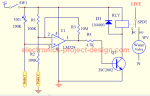 Experiment and test out this automatic garden watering circuit that will detect the moisture of the soil and on or off the water valve accordingly.
 -
Electronics Events
 Join the electronics events to enhance your knowledge and network with other professionals in this industry.
Design and build a battery tester to test dry cell and rechargeable battery with a voltage of less than 2V. Check here.
PCB Prototypes
Make your own printed circuit board and learn the processes involved along the way. More here.
Learn how to dissipate heat from your heat-sensitive electronic components.
Test the reliability of your products to the environment by stressing them in test lab.
Explore the use of 7-Segment Display, 555 Timer, Decade Counter and Binary Adder. Get the circuit.
Construct this simple door bell chime and have fun. Find out more here.
Build this simple home alarm to protect your house from intruders. See the schematic circuit.
New! Comments
Have your say about what you just read! Leave us a comment in the box below.