Heat Sink Characteristics
Heat Sink Fundamental
Any electronics design engineer sooner or later will face problems related to the heat that is produced in semiconductor devices. When a junction temperature of a semiconductor rises above its maximum allowable temperature, there is a need to dissipate this temperature or else the device will breakdown.
One of the common method used to dissipate the heat is using a heat sink(HS). HS is made of metal which is used to contact the hot surface of the electronic component.
It usually consists of a flat base with an array of comb or fin protrusions which increase the surface area of its contact with the air. The greater the surface area, the better it is able to dissipate the heat generated.
The cooling methods used could be natural air convection, forced air convection or forced liquid convection. Force air convection is usually done by using a fan to aid the cooling process. Most of power electronics devices such as IGBT, Triac, power transistors, voltage regulators will require a HS. Other devices that need HS as a source of thermal transfer are the microprocessors used in the computers and digital signal processors.
A thermally conductive grease compound is usually used between the surface of the device and the electronic device to ensure good thermal contact.
Material
The material is usually made of aluminium, cooper or a combination of aluminium and cooper. Aluminium is light and has a typical thermal conductivity of 200W/mK. Cooper has a thermal conductivity twice that of Aluminium and the typical value is 400W/mK.
This make cooper a better choice for use as HS. However, due to its weight, higher price and higher production cost, the Aluminium is a preferred choice. Aluminium is light, soft, and the production cost is lower as it can be extruded easily.
The Aluminium is made harder by the treatment of almite processing (Anodizing). The surface of it can also by dye with colors such as black, silver or gold. Anodize will help to produce a layer of insulating coating that helps to prevent corrosion.
Characteristics
How does one design or choose a good HS? The typical characteristics are as listed below.
- Heat dissipation is proportional to the surface area of its fins. Hence, it should be designed to have large surface.
- Heat dissipation is proportional to the temperature difference between the device and the ambient temperature.
- Flat surface contact with the heat source is critical as it allows the use of a layer of thermal compound to reduce the thermal resistance between the two devices.
- Forced convection by fan increases the cooling performance by more than 2 times compared to the natural convection. The design of the heat sink must allow for the air to easily flow through the fins.
- The way the mounting is done is critical. Mounting using screws are better than using clips, sticky tape or glue.
Calculation
HS performance is measured in °C/W and is called thermal resistance. If a thermal load of 50W is applied toa heat sink which causes the temperature of the heat source to rise by 20 °C, the HS has a rating of 20/50 °C/W = 0.40 °C/W
Example of a calculation.
Find the maximum operating temperature of a power transistor if the maximum junction temperature Tj= 150 °C, thermal resistance between junction and case RJC = 1.5 °C/W, Power consumption P = 6W, thermal resistance between heat sink and the ambient RHA = 8.0 °C/W, Mica insulation RCF = 1.0 °C/W.
The maximum ambient temperature that this transistor can operate is:
TA = Tj - (RJC + RCF + RHA)P
= 150°C - (1.5 + 1.0 + 8.0)6 °C
= 150°C - 63°C
= 87 °C

Recent Articles


-
Electronics Events
Join the electronics events to enhance your knowledge and network with other professionals in this industry. -
Electronics Design Contest
 Join electronics design contest and win prizes. Test your hardware and software skills against the best designers from the rest of the world.
 -
Garden Watering Circuit
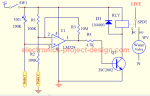 Experiment and test out this automatic garden watering circuit that will detect the moisture of the soil and on or off the water valve accordingly.
Design and build a battery tester to test dry cell and rechargeable battery with a voltage of less than 2V. Check here.
PCB Prototypes
Make your own printed circuit board and learn the processes involved along the way. More here.
Learn how to dissipate heat from your heat-sensitive electronic components.
Test the reliability of your products to the environment by stressing them in test lab.
Explore the use of 7-Segment Display, 555 Timer, Decade Counter and Binary Adder. Get the circuit.
Construct this simple door bell chime and have fun. Find out more here.
Build this simple home alarm to protect your house from intruders. See the schematic circuit.
New! Comments
Have your say about what you just read! Leave us a comment in the box below.