Signal Generator
Introduction To Signal Generator
The generation of signals is an important development in the troubleshooting and development of electronic design. The generator is used to provide known test conditions for the performance evaluation of electronic system design and for replacing signals that are missing in systems during repairing work. Most commonly they generate sine waves.
There are many types of generators but they all have the following common characteristics.
a) The frequency of the signal must be known and stable.
b) The signal must be free of distortion.
c) The amplitude must be controllable from small to relatively large values.
Some examples of these generators are function generator, pulse and sweep generator, sine wave generator, pulse and square wave generator and audio frequency signal generator.
A simple sine wave generator consists of an oscillator and an attenuator. The frequency stability and freedom from distortion depends on the design of the oscillator whereas the amplitude accuracy depends on the design of the attenuator.
Function generator basically produces square waves, saw tooth and triangular waves besides sine wave. For a beginner to electronics design who design simple to medium complexity of circuitry, it is generally a good idea to have a basic function generator as a start.
Audio generators produce signals in a range from a few Hertz up to several Kilohertz. Signals can be injected into audio amplifiers to see how they behave at various audio frequencies. Amplification and frequency response can be measured and distortion of the signal can be observed.
Radio frequency generators can provide frequencies from about 100 Kilohertz up to several hundred Megahertz. With radio frequency generators it is usually possible to modulate the R.F. with an audio signal to simulate a radio station.
Amplitude and frequency modulation are available. Using an R.F. generator the various tuned circuits in a radio can be adjusted for peak performance.
Function Generator Specifications
A typical function generator specification from a Tektronix model is as listed below.
a) An Integrated Signal Source For Benchtop Or System Use Fast, Precise, Easy-To-Use Signal Generator With Modulation, Sweep, And Arbitrary Capabilities
b) Built-In High-Resolution Monitor With Graphical User Interface
c) 12-Bit (1/4096) Vertical Resolution
d) 250 MHz, 1 ppm Accuracy, 0.5 Hz (10 digits) Resolution Clock
e) 16 Separate Arbitrary Waveforms With 1K (1024 points) Record Lengths
f) Standard Waveforms:
Sinewave - 0.5 Hz to 100 MHz
Square wave - 0.5 Hz to 50 MHz
Triangle, ramp, and pulse - 0.5 Hz to 31.2 MHz
g) Internal AM, FM, PSK, and FSK Modulation
h) External AM Modulation
i) Built-In Linear/Log Sweep
j) Built-In Trigger Delay (700 ns to 100 s)
Back To Signal Generator Home Page

Recent Articles


-
Electronics Events
Join the electronics events to enhance your knowledge and network with other professionals in this industry. -
Electronics Design Contest
 Join electronics design contest and win prizes. Test your hardware and software skills against the best designers from the rest of the world.
 -
Garden Watering Circuit
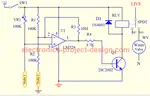 Experiment and test out this automatic garden watering circuit that will detect the moisture of the soil and on or off the water valve accordingly.
Design and build a battery tester to test dry cell and rechargeable battery with a voltage of less than 2V. Check here.
PCB Prototypes
Make your own printed circuit board and learn the processes involved along the way. More here.
Learn how to dissipate heat from your heat-sensitive electronic components.
Test the reliability of your products to the environment by stressing them in test lab.
Explore the use of 7-Segment Display, 555 Timer, Decade Counter and Binary Adder. Get the circuit.
Construct this simple door bell chime and have fun. Find out more here.
Build this simple home alarm to protect your house from intruders. See the schematic circuit.
New! Comments
Have your say about what you just read! Leave us a comment in the box below.