Thermal Shock Testing For Reliability of Electronic Devices
Introduction To Thermal Shock Testing
Thermal Shock is performed to determine the ability of a part (electronics devices, electronic products, etc) to withstand sudden changes in temperature. It is the most severe type of test of all the temperature related tests as it involves a high rate of change of temperature.
Usually the rate of change is 30 °C/min or higher. Parts that need to be shipped from a warm location to a freezing location during transportation/shipping or loading/unloading will need to undergo this test to simulate its real life condition.
The part is usually placed in a chamber of which it is exposed to very low temperature and move to a very high temperature within a short period before going back to room temperature. This is repeated over a few cycles. There are 2 types of system testing used i.e. air to air or liquid to liquid.
Air to air thermal shock testing used a very high rate of temperature change. In a two chamber design, one chamber temperature is kept hot and the other chamber is kept cold. A carriage is used to move the part under test between the 2 chambers within few seconds. Fully enclosed thermal shock test chambers are normally used to avoid unintended exposure to ambient temperature and the hazards of personnel handling.
In Liquid to liquid systems, a two vat system and a mechanized basket arrangement is used to move the part under test between the hot and cold sides of the equipment. This system is used when a higher rate of thermal transfer of greater thermal energy is needed.
In both systems, the equipment must be able to vary the hot chamber temperature, cold chamber temperature, dwelling time or soak time of the hot chamber, dwelling time of the cold chamber, transition time from one chamber to the other chamber and setting of the number of cycles.
The number of cycles can vary from 1 to 250 and its setting will depend on the type of device and its application . It is best to try and draw some analogies to the product lifetime and use.
After the final cycle, external visual examination of the case, leads, and seals shall be performed using magnifier at 10X to 20X. Its marking shall also be inspected at with at least 3X magnifier. An illegible mark or any evidence of damage to the case, leads, or seals after the stress test shall be considered a failure.
Electrical testing of the samples to the part specifications must also be performed to detect electrical failures due to the test. Failure mechanisms accelerated by thermal shock in the electronics industry include die cracking, package cracking, wire breaks and wire bond being lifted.
Two industry standards that govern temperature cycle testing are the Mil-Std-883 Method 1011 and the JEDEC JESD22-A106.
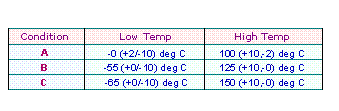
The Military Standard 883 Method 1011 thermal shock test specifications is as shown below:
Total Transfer Time < 10 seconds
Total Dwell Time > 2 minutes
Specified Temp reached in < 5 minutes
Must be conducted for a minimum of 15 cycles
Back To Thermal Shock Testing Home Page

Recent Articles


-
Electronics Design Contest
 Join electronics design contest and win prizes. Test your hardware and software skills against the best designers from the rest of the world.
 -
Garden Watering Circuit
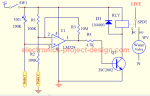 Experiment and test out this automatic garden watering circuit that will detect the moisture of the soil and on or off the water valve accordingly.
 -
Electronics Events
 Join the electronics events to enhance your knowledge and network with other professionals in this industry.
Design and build a battery tester to test dry cell and rechargeable battery with a voltage of less than 2V. Check here.
PCB Prototypes
Make your own printed circuit board and learn the processes involved along the way. More here.
Learn how to dissipate heat from your heat-sensitive electronic components.
Test the reliability of your products to the environment by stressing them in test lab.
Explore the use of 7-Segment Display, 555 Timer, Decade Counter and Binary Adder. Get the circuit.
Construct this simple door bell chime and have fun. Find out more here.
Build this simple home alarm to protect your house from intruders. See the schematic circuit.
New! Comments
Have your say about what you just read! Leave us a comment in the box below.