Electronic Ballast Design
Introduction To Electronic Ballast Design
Fluorescent Lamp was introduced commercially in the 1940s and was a success in small scale lighting replacing the use of tungsten incandescent bulb. It continued to be used in the 21st century and has since evolved into many variation of outlook, applications and control.
Two main functions of a fluorescent lamp ballast are providing a starting kick and to limit the current to its operating value for the tube that is being used. There are basically 2 types of ballasts namely magnetic ballast and electronic ballast design. The magnetic ballast uses a core and coil assembly transformer that provides a minimum functions of starting and operating the lamp.
Hence it is not as efficient as the electronic ballast. Electronic ballast operates at high frequencies from 20kHz to 45kHz and uses electronics circuitry to optimize the operation of the lamp.
Electronic ballast design is becoming more common due to its superior performance. It outputs 10%-15% more light output, does not have the 50/60 cycles irritating hum, high frequency switching that does not have visible flicker to the human eyes, cooler and more reliable. Though its initial cost is higher than the magnetic ballast, its payback will come in the long run. Operating the ballast at higher frequency means that the design can be smaller and made compact. It utilizes the switching mode power supply technology in its implementation.
Magnetic and electronic ballasts can be categorized into 3 categories - instant start, rapid start and programmed start.
Instant start ballasts require an instant-start certified lamp and ignite a lamp in about 80 milliseconds or less using a high frequency electronic circuit. It starts the lamp without heating the cathodes by using a high voltage at around 600V.
It is the most efficient energy type when used in installations where the lamps are not turned on and off regularly.
Rapid start ballasts precisely heat the cathodes and then ignite the lamp with a lower charge. In this way, it helps to prolong the life of the lamp but it uses more energy as the cathodes are heated up continuously during the operation of the lamp.
Programmed Start is an upgrade version of rapid start. It allows the cathodes to be preheated before applying the voltage to the lamps to strike an arc. This type gives the best life to the lamps and is used in applications where frequent ON/OFF of lights are required.
Electronic ballast must be designed, installed and operate in compliance with the CSA, UL and NEC requirements. As the installation and testing come in contact with hazardous voltage, only qualified personnel should perform the installation. It should be done with the power to the lamp turned OFF.
Compact Fluorescent Lamp (CFL) Electronic Ballast Design
One of the advancement made in the field of electronic ballast control is the invention of compact fluorescent lamp or CFL in short. It is also known as energy saving light bulb and is usually screws into the standard light bulb socket or plugs. Common screw type size used is E27. Compared to incandescent bulb, it have a longer rated life and uses less electricity though its initial cost is higher.
Two main parts to a CFL are the gas filled bulb and the electronic ballast. Electrical energy flows though the gas causing it to give off ultraviolet light(UV light) that excites a white phosphor coating on the inside of the tube. This coating emits visible light.
The application note from International Rectifier provides the design of a 13W CFL compact using an IR53H420 Integrated Half-Bridge device. It is able to drive a 13W lamp from 110 or 220 VAC input, 34kHz frequency of operation and Softstart with cathode preheating.
Back To Electronic Ballast Design Home Page

Recent Articles


-
Electronics Design Contest
 Join electronics design contest and win prizes. Test your hardware and software skills against the best designers from the rest of the world.
 -
Garden Watering Circuit
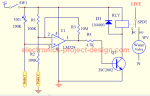 Experiment and test out this automatic garden watering circuit that will detect the moisture of the soil and on or off the water valve accordingly.
 -
Electronics Events
 Join the electronics events to enhance your knowledge and network with other professionals in this industry.
Design and build a battery tester to test dry cell and rechargeable battery with a voltage of less than 2V. Check here.
PCB Prototypes
Make your own printed circuit board and learn the processes involved along the way. More here.
Learn how to dissipate heat from your heat-sensitive electronic components.
Test the reliability of your products to the environment by stressing them in test lab.
Explore the use of 7-Segment Display, 555 Timer, Decade Counter and Binary Adder. Get the circuit.
Construct this simple door bell chime and have fun. Find out more here.
Build this simple home alarm to protect your house from intruders. See the schematic circuit.
New! Comments
Have your say about what you just read! Leave us a comment in the box below.